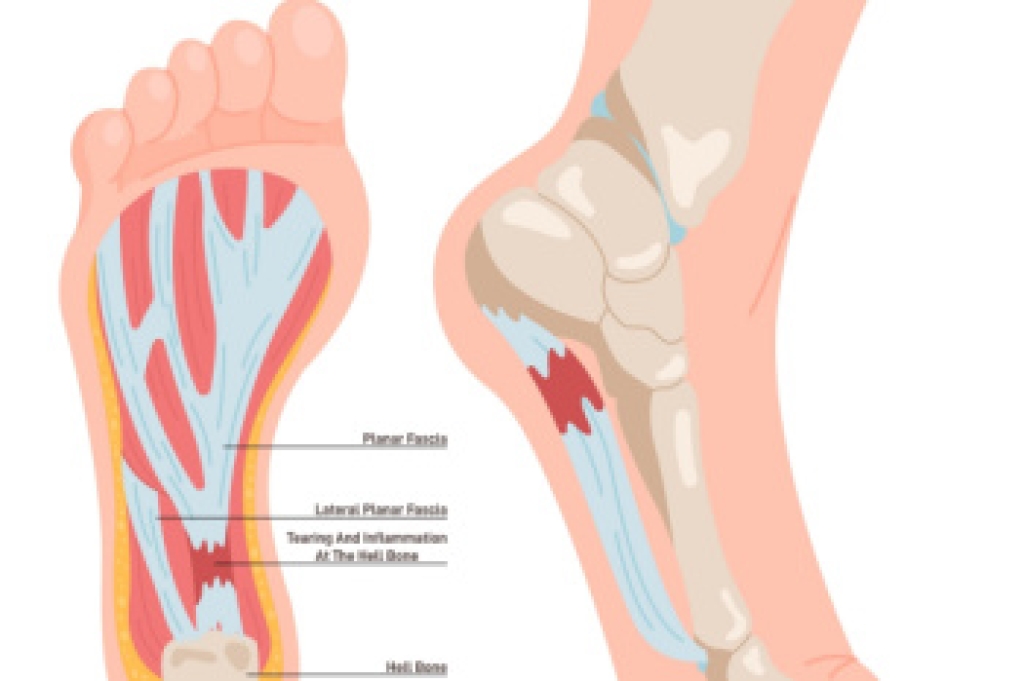
Plantar fasciitis causes pain along the bottom of the heel. It occurs when the plantar fascia, a strong band of tissue connecting the heel bone to the toes, becomes irritated or strained. This tissue supports the arch and helps absorb pressure with every step. Repeated stress can cause small tissue injuries and discomfort. Plantar fasciitis may affect people of many ages, especially those who spend much of the day standing, walking, or participating in activities that place repeated pressure on the feet. Recognizing the condition early can help prevent heel pain from becoming a persistent problem.
One of the most recognizable symptoms of plantar fasciitis is sharp heel pain with the first steps in the morning. The discomfort may improve after moving around but can return after sitting or resting for a long time. Pain may also develop after exercise, prolonged walking, or extended periods of standing. Tenderness commonly occurs near the bottom or inner portion of the heel. As symptoms continue, everyday activities may become more difficult, including walking, working, and completing household tasks.
Several risk factors can contribute to plantar fasciitis. Frequent running, walking, and prolonged standing can place additional stress on the plantar fascia. Flat feet, high arches, and certain walking patterns may also affect how pressure is distributed across the foot. Wearing shoes without adequate support can increase strain, particularly when standing or walking for long periods of time. Carrying excess body weight may place additional pressure on the feet and contribute to irritation.
A podiatrist can examine the foot, review symptoms, and assess foot structure and walking mechanics to determine the likely cause of heel pain. Treatment may include wearing supportive footwear, custom orthotics, and stretching exercises. If you have consistent heel pain or symptoms of plantar fasciitis, it is suggested that you consult a podiatrist for effective relief and treatment solutions.
Plantar fasciitis can be very painful and inconvenient. If you are experiencing heel pain or symptoms of plantar fasciitis, contact Sarah Urton, DPM from Kitsilano Foot and Ankle Clinic. Our doctor can provide the care you need to keep you pain-free and on your feet.
What Is Plantar Fasciitis?
Plantar fasciitis is the inflammation of the thick band of tissue that runs along the bottom of your foot, known as the plantar fascia, and causes mild to severe heel pain.
What Causes Plantar Fasciitis?
- Excessive running
- Non-supportive shoes
- Overpronation
- Repeated stretching and tearing of the plantar fascia
How Can It Be Treated?
- Conservative measures – anti-inflammatories, ice packs, stretching exercises, physical therapy, orthotic devices
- Shockwave therapy – sound waves are sent to the affected area to facilitate healing and are usually used for chronic cases of plantar fasciitis
- Surgery – usually only used as a last resort when all else fails. The plantar fascia can be surgically detached from the heel
While very treatable, plantar fasciitis is definitely not something that should be ignored. Especially in severe cases, speaking to your doctor right away is highly recommended to avoid complications and severe heel pain. Your podiatrist can work with you to provide the appropriate treatment options tailored to your condition.
If you have any questions, please feel free to contact our office located in Vancouver, BC . We offer the newest diagnostic and treatment technologies for all your foot care needs.
